

close
Choose Your Site
Global
Social Media
Views: 0 Author: Site Editor Publish Time: 2024-06-26 Origin: Site
| Definition of Vertical Rotisserie | Primary Uses for Roasting Meats |
|---|---|
| It is a way to cook where heat comes from the side or below. The meat cooks as its fat drips down and keeps it moist. | People use it to make Doner kebab, Gyros, Shawarma, and Taco al pastor. |
A vertical rotisserie has a tall spit and heat on the side. It cooks meats that are stacked or layered. People in many countries like food made with this machine. Some favorite meals are:
Shawarma: Lamb, chicken, or beef is marinated. It is served in pita bread.
Doner Kebab: Turkish lamb or beef is used. It is served in lavash bread.
Gyros: This Greek dish often has tzatziki sauce.
Tacos Al Pastor: Mexican pork is marinated. It is served in corn tortillas.
You can find these foods in street markets and restaurants everywhere. This shows how useful the rotisserie is.
A vertical rotisserie cooks meat with heat from the side. This keeps the meat juicy and tasty. The fat drips away as it cooks.
Many people use a vertical rotisserie to make shawarma, gyros, and tacos al pastor. These foods are enjoyed in many places around the world.
Electric vertical rotisseries are simple to use and safe. They keep the cooking temperature steady. This helps food cook the same way every time.
This way of cooking is healthier because extra fat drips off. This makes the food less oily.
Vertical rotisseries do not take up much space in kitchens. They are good for cooking a lot of meat at one time.
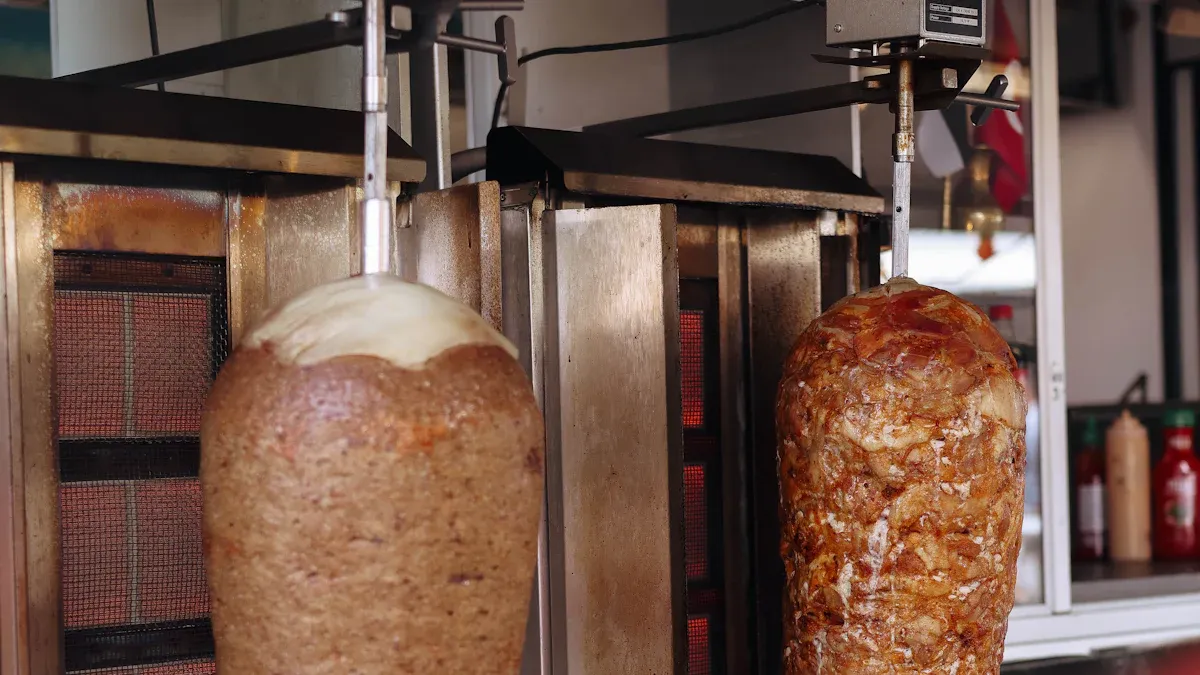
Image Source: pexels
A vertical rotisserie has a tall metal rod called a spit. The spit stands straight up inside the machine. Chefs put pieces of meat on the spit. The heat source is next to or behind the spit. This setup lets the heat cook the meat from the side. The spit turns, so the meat browns all over. Juices and fat drip down as it cooks. This keeps the meat moist and tasty. Many kitchens use this way to roast meat. It makes the meat soft and juicy.
The rotisserie has a motor that spins the spit. Some machines use electricity for turning. Others need people to turn the spit by hand. The heat can come from electricity, gas, or charcoal. The upright design saves space in the kitchen. It also makes it easy to cut meat right off the spit. Restaurants and street food sellers like this style. It works well for cooking a lot of meat at once.
Tip: The upright spit lets extra fat drip away. This makes the food less greasy and healthier.
People use a vertical rotisserie to cook many meats. Chefs often stack beef, lamb, or chicken with spices. These meats are used for shawarma, doner kebab, and gyros. Pork is used for tacos al pastor. Some cooks roast whole animals like goat or chicken. Fish and roasts can also be cooked in this machine.
The table below lists meats and how chefs get them ready for the rotisserie:
| Meat Type | Preparation Method |
|---|---|
| Al pastor | Meat is grilled on a spit, a style from Mexico. |
| Cabrito al pastor | A whole young goat is opened flat and cooked on a spit. |
| Doner kebab | Meat is stacked in a cone shape and sliced as it cooks. |
| Gyros | Greek meat dish cooked on a vertical rotisserie. |
| Roast chicken | Chicken is marinated with garlic, bay leaf, onion, pepper, soy sauce, and fish sauce. |
| Roast lamb | Whole sheep or lamb is roasted on a spit for North African food. |
| Rotisserie chicken | Chicken is cooked on a spit next to the heat. |
Rotisserie chicken is popular in many places. Meat cooked on a vertical rotisserie is juicy and full of flavor. Roasting this way makes the outside crispy and tasty.
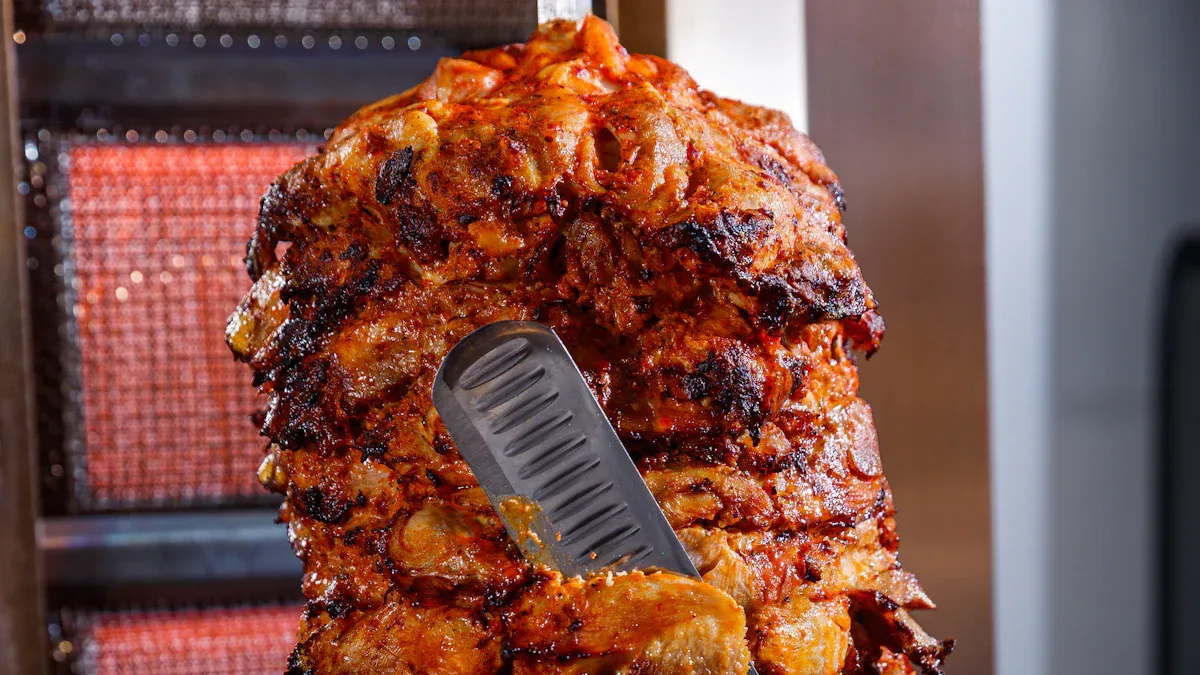
Image Source: pexels
A vertical rotisserie has a spit that turns slowly. The spit uses a motor to spin the meat. The meat moves in front of the heat source. This helps the heat reach every side of the meat. The turning makes juices spread over the meat’s surface. Juices keep the inside moist and the outside crispy. The outside gets golden brown as it cooks. Chefs do not need to turn the meat by hand. The machine does all the turning for them.
The table below explains how rotation helps cook meat evenly:
| Evidence Description | Reasoning |
|---|---|
| The spit keeps turning so heat cooks all sides. | This means every part of the meat cooks at the same time. |
| The spit lets every part of the meat face the heat. | This makes the meat juicy and tender when finished. |
Rotisserie cooking works for many kinds of meat. Chicken, lamb, pork, and beef all cook well this way. The meat cooks slowly and stays juicy. The outside gets a nice color and texture. The table below shows how long different meats take to cook:
| Meat Type | Cooking Time | Internal Temperature |
|---|---|---|
| Chicken Shawarma | 40 min per pound | 160 F |
| Cornish Hens | 40 min per pound | 175 F |
| Turkey Breast | 30-40 min per pound | 170 F |
| Corned Beef Brisket | 60 min per pound | 205 F |
| Lamb Roast | 40 min per pound | 135 F |
| Lamb Chops/Ribs | 35 min per pound | 130 F |
| Gyro Meat Cone | ALL DAY! | 150 F |
| Al Pastor | 30 min per pound | 150 F |
| Pork Belly | 60 min per pound | 200 F |
| Spiral Ham | 2 hours | N/A |
| Pork Tenderloin | 30 min per pound | 145 F |
| Whole Chicken | 40 min per pound | 160-170 F |
Note: Cooking times can change if the meat is bigger or smaller. Always check the inside temperature to make sure it is safe to eat.
Electric rotisserie models make cooking simple and safe. These machines use electricity to spin the spit and heat the meat. They let you control the temperature easily. The heat stays the same while cooking. Many electric models have buttons to set cooking programs. You can save up to seven programs for cooking and keeping food warm. After cooking, the machine keeps the food warm until you are ready.
The table below compares electric and gas rotisserie models:
| Feature | Electric Models | Gas Models |
|---|---|---|
| Temperature Control | Easy to control and steady heat | Strong heat for a special flavor |
| Installation | Easy to set up indoors | Needs expert setup and good air flow |
| Safety Features | Often has auto shut-off and safe outsides | May not have as many safety features |
Electric rotisserie models often shut off by themselves. The outside stays cool to help prevent burns. Many models meet NSF standards. This means they use safe materials, are easy to clean, and help keep food safe. Health inspectors often ask for this certification in restaurants.
Electric rotisserie cooking saves time and energy. Some machines cook faster than other brands. They use less energy, which saves money. One-touch cooking makes food come out the same every time. Cleaning is easy because the machine has helpful features.
Tip: Electric rotisserie models are great for restaurants and homes. They are safe, easy to use, and give good results.
A vertical rotisserie uses gravity to pull fat down. The upright spit lets extra fat drip off the meat. The fat collects at the bottom of the machine. This makes the roast healthier and cleaner than other ways. People who eat rotisserie chicken notice it is less greasy. Chefs like this method because it makes lean meals. Shawarma and al pastor taste good because the meat does not sit in extra fat.
Tip: Taking away extra fat can help lower calories in each serving.
Rotisserie cooking keeps meat juicy and tasty. The spit turns slowly so the meat cooks all over. Juices move across the meat and make it tender. The meat stays moist because of the self-basting effect. Chefs do not need to use much oil or marinade. Dishes like shawarma and al pastor taste better because the meat keeps its juices.
The rotisserie turns the meat slowly over heat. This makes the meat juicy and tender.
The juices spread around the meat. This keeps it moist and tasty. Chefs do not need extra oil or marinade.
The vertical rotisserie helps meat brown on every side. The spit turns so each part faces the heat. This makes the outside crispy and the inside soft. People like the golden color and crunchy outside of rotisserie chicken. Chefs use this way to make sure each slice looks and tastes good.
The table below shows how vertical and horizontal rotisseries compare:
| Aspect | Vertical Rotisserie Benefits | Horizontal Rotisserie Benefits |
|---|---|---|
| Health | Lets extra fat drip off, making meals leaner. | Keeps more fat, so meals are richer. |
| Taste | Cooks evenly, keeps flavor, and gives good texture. | May cook unevenly and lose flavor. |
Note: Vertical rotisserie cooking is better for health and taste. Many restaurants use it for dishes like shawarma and al pastor.
Rotisseries come in two main designs. One is vertical, and one is horizontal. The vertical rotisserie stands up tall. The spit goes straight up and down. The heat is next to or behind the meat. This saves space in small kitchens. The horizontal rotisserie lays the spit sideways. Heat comes from below or both sides. Horizontal models can hold bigger birds or roasts. Some machines have more than one spit. This lets you cook many foods at once. Both types use motors to spin the spit. This helps the meat cook evenly.
Note: Vertical rotisseries let you slice meat right off the spit. Horizontal rotisseries are better for whole chickens or big pieces.
Rotisserie cooking makes meat crispy outside and juicy inside. The vertical rotisserie lets fat drip down. This makes the food less greasy. It works well for stacked meats like shawarma or gyro. The horizontal rotisserie keeps more fat near the meat. This can make the food taste richer. Both styles turn the meat slowly. This helps cook the meat all over. Chefs pick the rotisserie based on what they want to cook. Vertical rotisseries make slices with a golden crust. Horizontal rotisseries are good for whole chickens and big roasts.
| Cooking Style | Best For | Fat Drainage | Browning | Juiciness |
|---|---|---|---|---|
| Vertical Rotisserie | Stacked meats, shawarma | High | Even | Moist |
| Horizontal | Whole birds, large roasts | Moderate | Even | Rich |
People should think about space and how much food they want to cook. Vertical rotisseries save space. They fit well in small kitchens. Horizontal rotisseries need more room. They can cook bigger foods. Some machines have more spits for cooking many things at once. Temperature controls and preset buttons make cooking easier.
| Consideration | Details |
|---|---|
| Space | Vertical rotisseries save space, making them ideal for smaller kitchens. |
| Cooking Capacity | Vertical models are suitable for specific foods like gyro meat, while horizontal may handle larger items. |
| Size | Consider both the size of the food and available kitchen space; some models fit only smaller birds. |
| Number of Spits | More spits allow cooking multiple smaller items, while single spits are better for larger birds. |
| Temperature Setting | Variable settings offer flexibility; preset controls can simplify cooking. |
Cleaning is important for both types. Owners should let the oven cool before cleaning. Wash the glass door with warm soapy water. Clean the inside and take out spits to wash them. Check gears and burners often to keep the rotisserie working well. Use special cleaners to stop grease from sticking. Look for worn parts and replace them when needed.
| Maintenance Task | Description |
|---|---|
| Cooling | Allow the oven to cool completely before cleaning. |
| Cleaning Glass | Clean the glass door with warm soapy water and a recommended glass cleaner. |
| Interior Cleaning | Apply a degreaser and hose out the interior cabinet with water. |
| Spit Cleaning | Remove spits to wash them in the sink or dishwasher. |
| Gasket Care | Clean door gaskets with warm soapy water and allow to dry. |
| Burner Maintenance | Remove ceramic gas burners monthly to clean debris. |
| Gear Inspection | Check shaft gears for proper alignment with spit gears. |
| Annual Inspection | Inspect spit drive mechanisms and replace worn components. |
| Firebox Cleaning | Periodically clean firebox ashes and convection fan blades. |
| Exterior Cleaning | Use a stainless-steel cleaner to remove grease and oil residues. |
| Preventive Solutions | Use solutions that prevent grease adherence before cooking. |
| Replacement Signs | Look for signs of wear that indicate the need for replacement. |
People who want a rotisserie at home should check their kitchen size. They should think about what foods they want to cook. Commercial rotisseries are best for restaurants. Home cooks may like vertical rotisseries for easy slicing and saving space. Horizontal rotisseries are good for roasting whole chickens or big meats.
Tip: Pick a rotisserie that fits your kitchen and matches the foods you like to make.
A vertical rotisserie makes food taste great and juicy. The skin gets crispy when you use this machine. People like it because it cooks healthier meals. It is easy to use and saves energy. Many people enjoy dishes like shawarma and gyro. These foods make rotisseries popular at home and in restaurants. When you buy one, think about how much food you want to cook. Make sure it is safe and follows the rules. Look for new features that help save energy. Pick a model that will last and save money over time.
| Factor | Description |
|---|---|
| Scalability | Lets you cook more food as you need |
| Regulatory compliance | Follows safety and environment rules |
| Innovation | Has smart features and uses less energy |
| Long-term ROI | Lowers costs and helps you work better |
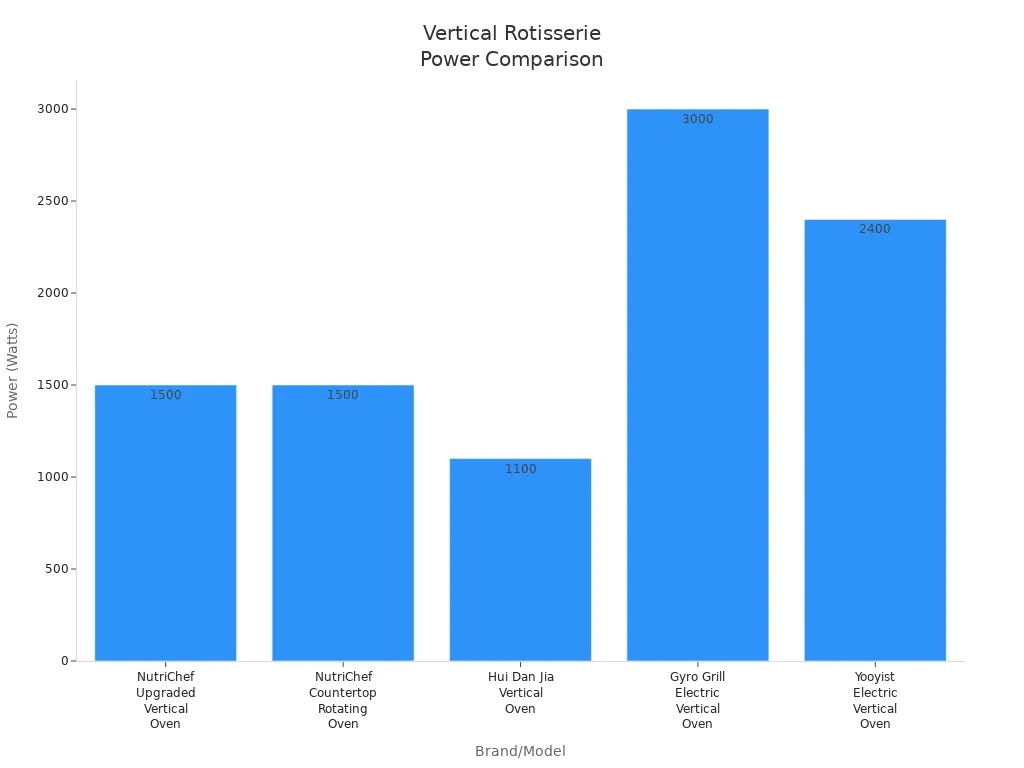
Cleaning the rotisserie often stops grease from building up. This helps the machine work well for a long time. Trying this way of cooking adds fun and new tastes to your kitchen.
You can cook chicken, lamb, beef, pork, and fish. Chefs stack meats for shawarma, gyro, and tacos al pastor. Whole chickens and roasts also cook well.
The upright spit lets fat drip off the meat. This lowers grease and calories in your food. Many people use this way to make lean meals.
A commercial rotisserie cooks more food at once. It has stronger motors and extra spits. Restaurants use these to serve many people fast.
Yes, it does. Clean the spit, drip tray, and inside after each use. Cleaning often keeps the machine safe and working right.
Most electric models are safe to use inside. Always follow safety rules and keep the area clean. Good airflow helps get rid of smoke and smells.


