

close
Choose Your Site
Global
Social Media
Views: 0 Author: Site Editor Publish Time: 2025-02-27 Origin: Site
You want to choose an espresso machine that fits your business. Think about how many drinks you need to make and the volume you expect during busy hours. Your space matters, too. A commercial espresso machine should match your workflow and look good in your café. Focus on what helps your staff work fast and keeps customers happy.
Think about what your business needs before picking an espresso machine. Look at how many drinks you will make, how much space you have, and how skilled your staff is. This helps you choose the best machine.
Pick the right number of group heads for your machine. If you have more group heads, you can serve drinks faster when it gets busy.
Plan your budget for more than just the price of the machine. Remember to add shipping, maintenance, and supplies. This helps you avoid surprise costs.
Choose a machine that works well with how your café runs. Automatic machines are good if you want speed. Semi-automatic machines let you have more control.
Make sure the machine saves energy and is easy to clean. These things help you save money and keep your café working well.
To pick the right commercial espresso machine, you need to know what your business needs. The machine should match how many drinks you make each day. It should fit in your space, work with your budget, and be easy for your staff to use. Let’s look at each thing you should think about so you can pick the best machine for your café or restaurant.
First, think about how many espresso drinks you sell when you are busiest. If you guess too low, you could have long lines or upset customers. Here are some mistakes people make when choosing a machine:
Picking a machine that is too slow for busy times.
Not thinking about future growth, which can cause problems later.
Small cafés sometimes forget to get a machine that can make at least 100 cups a day.
The number of group heads on your commercial espresso machine changes how many drinks you can make each hour. Look at this table to see how group count matches drink output and business type:
| Group Count | Typical Auction Range | Best Applications | Cups Per Hour |
|---|---|---|---|
| 1-Group | Up to $1,200 | Home/prosumer, small cafe, food truck, bakery with light coffee service | 20-30 |
| 2-Group | 500−4,000 | Standard cafe, restaurant bar, bistro, breakfast-focused diner | 40-60 |
| 3-Group | 1,000−12,000 | High-volume cafe, specialty coffee shop, hotel restaurant, event catering | 60-90 |
| 4-Group | $2,500+ (rare) | Extreme high-volume operations, convention centers, airport terminals | 90+ |

If your café is very busy, you need a bigger machine with more group heads. This helps you serve people fast, especially when it gets crowded. If your business is smaller, one or two group heads might be enough.
Before you buy a commercial espresso machine, measure your counter. Make sure the machine fits and leaves space for your staff to move. The counter should be at least 36 inches high. This height lets baristas see customers and watch the milk as it steams. If you want to put a water softener or filter under the machine, leave at least 24 inches of space for the cabinet door.
Think about where you will put the machine. Will it be close to the register or in a different spot? Make sure there is room for grinders, cups, and cleaning tools. A good setup helps your staff work faster and keeps your café neat.
Your budget is important when you choose a machine. Commercial espresso machines can cost a lot or a little. Here is a quick look at prices:
| Machine Type | Price Range |
|---|---|
| 1-group machine | Starting around $5,000 |
| 2-group machine | 12,000to20,000 |
| 3+ group machine | Exceeds $25,000 |
But the price of the machine is not the only thing to pay for. You also need to think about:
Shipping and setup fees, which can add 500to1,000.
Water softeners and filters.
Monthly costs for coffee beans and milk.
Cleaning supplies and descaling products.
Repair visits, which can cost over $1,000.
Yearly maintenance contracts, which cost 200to600.
Higher water bills if you use a plumbed-in machine.
Cheaper machines may seem like a good deal, but they can break more and cost more to fix. Buying a good commercial espresso machine can save you money over time.
Think about how much your staff knows about espresso machines. If you have skilled baristas, you might want a semi-automatic machine. These machines let baristas control more, but they take practice to use well. If your staff changes a lot or you want to train new people fast, an automatic or super-automatic machine might be better. These machines do most of the work and help you serve drinks quickly.
Here is a quick guide to training time for each machine type:
| Machine Type | Training Required |
|---|---|
| Super Automatic | No barista training or labor necessary |
| Automatic | Some barista training needed, and some labor is necessary |
| Traditional/Semi Automatic | A highly skilled barista is necessary for perfect espresso creation |
Semi-automatic machines let baristas make custom drinks but need more skill.
Automatic machines make the same drinks every time and are good for busy places.
Super-automatic machines do almost everything, which is good if you have new or changing staff.
A machine that fits your business keeps things running smoothly and makes customers happy. When you pick a commercial espresso machine, always think about your business needs, space, budget, and staff skills.
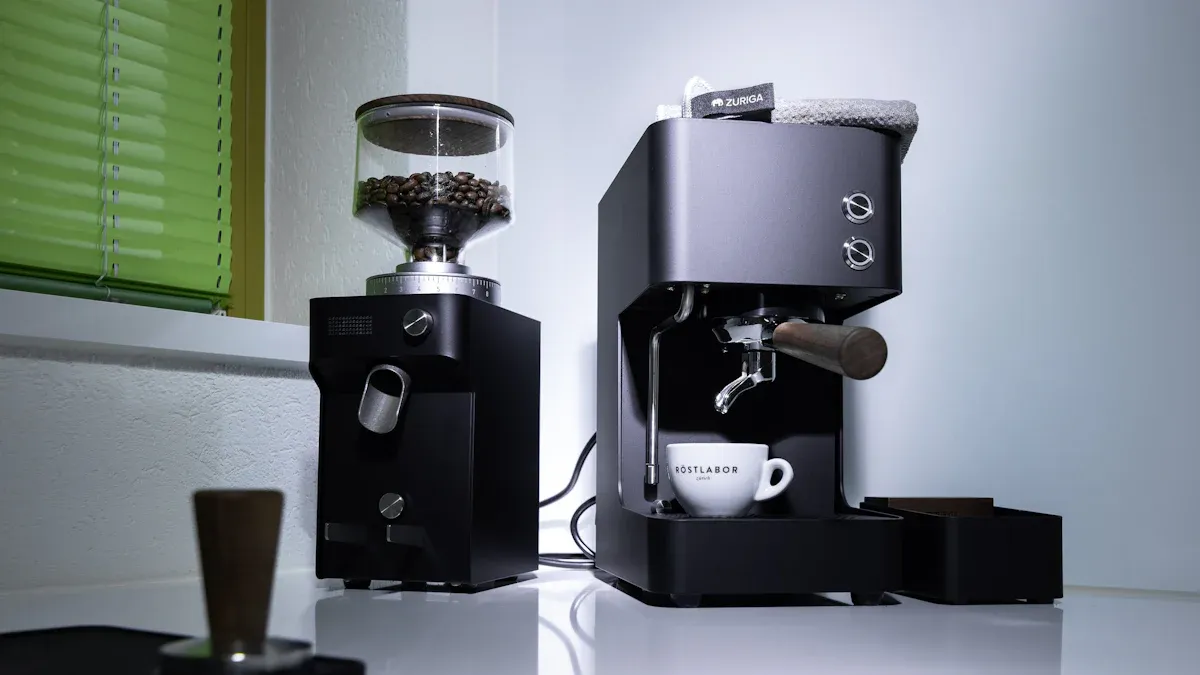
Image Source: unsplash
There are different types of commercial espresso machines. Each type works in its own way. Some let you control everything. Others make coffee with just one button. The best type for you depends on your business. You should also think about how busy you get and how skilled your staff is.
Manual machines let you do every step yourself. You pull a lever to start the process. You set the pressure and decide how long to brew. These machines are good if you want to show off your barista skills. They help you make a special coffee experience. Manual machines look old-fashioned and unique. But they are hard to learn and take time to use.
| Advantages of Manual Espresso Machines | Disadvantages of Manual Espresso Machines |
|---|---|
| You control pressure, temperature, and timing | Hard to learn and need lots of practice |
| You can make high-quality espresso with skill | Need extra tools like a grinder and scale |
| They are strong and made with good materials | Making coffee takes longer and needs more work |
| They look cool and classic in a café | Not good for busy places or offices |
Tip: Manual machines are best for small coffee shops that care about quality and style more than speed.
Semi-automatic machines give you some control. You make the espresso shot and steam the milk. The machine helps with water pressure. These machines are good for baristas who want control but also need to work fast.
| Feature | Semi-Automatic Machines | Fully Automatic Machines |
|---|---|---|
| You can change how drinks are made | You just press a button for drinks | |
| Drink quality depends on the barista | Drinks taste the same every time | |
| Making drinks takes more time | Making drinks is faster | |
| You can make drinks your own way | Drinks are always the same |
Semi-automatic machines are popular in special coffee shops. They give good quality and let staff make drinks their way.
Automatic machines are easy to use. You press a button and the machine does the rest. You still have to grind and tamp the coffee. But the machine brews and froths by itself. These machines are good for busy cafés or restaurants. They help you make drinks fast and keep them the same every time.
| Type of Machine | Operation Description | Output Quality Description |
|---|---|---|
| Automatic Espresso Machines | Makes coffee and froth when you press a button | Coffee is always the same, but you still grind and tamp |
Automatic machines help you serve people quickly. They are good if your staff changes a lot.
Super-automatic machines do everything for you. They grind beans, brew espresso, and froth milk with one touch. You do not need much training to use them. These machines are great for busy places or offices. They are best when you need drinks fast and want them to taste the same.
| Feature | Super-Automatic Espresso Machines | Other Types (e.g., Semi-Automatic) |
|---|---|---|
| Brewing is done inside the machine | You have to do some steps yourself | |
| Has a grinder built in | You need a separate grinder | |
| You do almost nothing | You have to do a lot | |
| Can make many kinds of drinks | Can make fewer kinds of drinks |
Super-automatic machines do all the steps for you. They grind beans, tamp, heat water, brew, and froth milk. You just press a button. You can make espresso, cappuccinos, and lattes easily.
When you pick an espresso machine, think about your business. Think about your staff and how fast you want to serve drinks. The right machine helps you make good coffee and keeps customers happy.
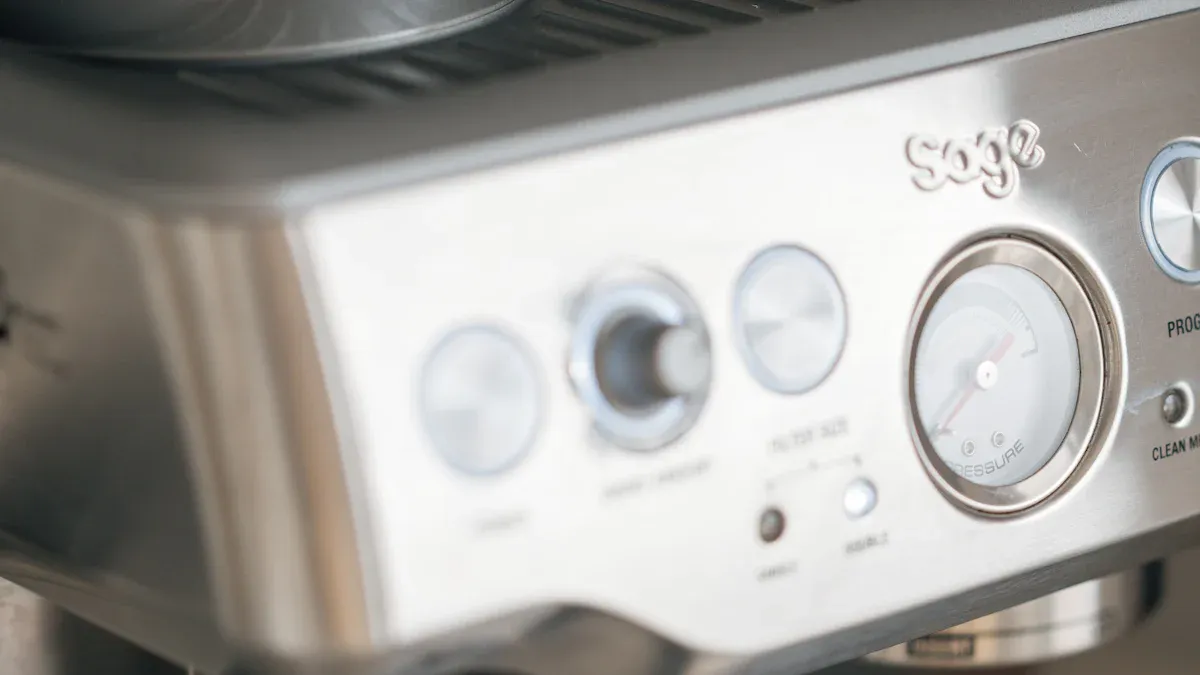
Image Source: pexels
When you want to serve high-quality drinks and keep your café running smoothly, you need to focus on the essential features of the right commercial espresso machine. These features help you work faster, keep your drinks consistent, and make cleaning easier. Let’s break down what you should look for so you can make smart espresso machine recommendations for your business.
The boiler is the heart of your espresso machine. It heats the water and makes steam for milk. The right boiler type helps you serve drinks quickly and keeps the taste the same every time. Here’s a quick look at the main types:
| Boiler Type | Advantages | Disadvantages |
|---|---|---|
| Single Boiler | Low cost, simple design. | Cannot pull shots and steam milk at the same time; you have to wait for temperature changes. |
| Heat Exchanger | Can steam milk and pull shots at the same time. | Harder to control brew water temperature; risk of overheating. |
| Thermoblock | Lets you brew and steam together. | Needs a separate brew boiler; may not keep up in busy shops. |
| Dual Boiler | Great control and consistency for both brewing and steaming. | Costs more because of extra parts. |
If you want to serve many drinks fast, dual boiler or heat exchanger machines are usually the right espresso machine for you. They let you brew and steam at the same time, which keeps your line moving. If you run a smaller shop or want to save money, a single boiler might work, but you’ll need to wait between drinks.
Group heads are where the magic happens. They control how water flows through the coffee and affect the taste of every shot. The right commercial espresso machine will have group heads that stay clean and keep water at the right temperature and pressure. This means your drinks taste great every time.
If you want to serve more customers at once, you need more group heads. Two or three group heads let you make several drinks at the same time. This is important during busy hours. Make sure you keep your group heads clean and check them often. A well-maintained group head gives you better flavor and faster service.
Programmable features make your life easier. They help you keep drinks consistent and speed up service. Many coffee shop owners love these features because they save time and reduce mistakes. Here are some of the most valued programmable options:
| Feature | Description |
|---|---|
| Fast & Intuitive Ordering Screen | Lets you take orders quickly, which is key when you’re busy. |
| Integrated Payment Processing | Accepts many payment types, making things easy for you and your customers. |
| Smart Inventory & Ingredient-Level Tracking | Gives you real-time updates on supplies, so you never run out or waste ingredients. |
| Customer Loyalty & Rewards Integration | Helps you keep regulars coming back with special offers and tracking. |
| Mobile & Online Ordering Capabilities | Lets customers order from their phones or computers, which can boost your sales. |
When you choose the right espresso machine, look for these essential features. They help you work smarter, not harder.
You want a machine that’s easy to clean and maintain. Good maintenance keeps your drinks tasting great and stops problems before they start. Here’s what you should do to keep your machine in top shape:
Clean the grinder and steam wand every six months.
Check your water softener system twice a year.
Inspect the pressure safety valve and change portafilter gaskets and screens once a year.
Clean the drain box and line, and check for leaks every year.
Test group flow rates, switches, and water quality every three months.
Replace worn gaskets and steam assembly parts twice a year.
Scrub inside chambers, check water pressure, and clean spray heads every week.
If you skip maintenance, you might get uneven espresso shots or weak steam. Milk can build up in the steam wand, so clean it every day. Fix leaks right away to avoid bigger problems. The right commercial espresso machine will make cleaning simple and help you avoid costly repairs.
Energy efficiency saves you money and helps the planet. The right espresso machine uses less power but still makes high-quality drinks. Look for machines with insulated boilers, energy-saving modes, and fast heat-up times. These features cut down on your electric bill and keep your café running smoothly. You can serve more drinks without wasting energy.
Looks matter, too. The right commercial espresso machine should fit your café’s style and make a good first impression. Choose a machine that matches your décor and feels inviting. Sleek designs and bright displays can catch a customer’s eye. Easy-to-read screens and simple buttons help your staff work faster. When your machine looks good and works well, customers notice.
Tip: Always balance performance, cleaning, and design when you pick your machine. The right commercial espresso machine will help you serve high-quality drinks, keep your staff happy, and make your café stand out.
When you buy a commercial espresso machine, you want it to work every day. You want it to last a long time. Choosing a machine from a trusted brand helps you avoid problems. Good support can help you fix issues fast. Let’s see what matters most.
The parts inside your espresso machine are important. Machines made with copper and stainless steel last longer. Copper keeps heat steady and fights germs. Stainless steel does not rust and is very strong. Some machines use insulation to save energy and keep water hot. Here is a table showing what top machines use:
| Material | Attributes | Popular Machines |
|---|---|---|
| Copper | Best thermal conductor, antimicrobial, flexible, less corrosion resistant | ECM Technika IV, Expobar Pulser, Profitec Pro 800, Rocket Espresso Giotto, 969.Coffee Elba 1/3 |
| Stainless Steel | Highest resistance to corrosion, affordable, durable | ECM Classika PID, Profitec Pro 500 PID, ECM Synchronika |
| Insulation | Retains heat, reduces energy use | N/A |
You need to take care of your machine. Regular service stops breakdowns and keeps drinks tasting good. Most machines need a check every few months. Here is what you should know:
Super-automatic machines need service every 3-4 months after 10,000-15,000 shots.
Gaggia machines need service every 4-6 months after 15,000-20,000 shots.
Necta machines need service every 2-4 months after 8,000-12,000 shots.
High-volume machines need service every 3-6 months after 20,000-25,000 shots.
Service calls cost 100to150 per hour. If you need help at night, it costs $225 per hour. Small repairs take 1-2 hours.
Good support makes owning a machine easier. Top brands help by phone and email. They can install machines anywhere in the country. You get a warranty for parts, but you pay for labor. Shipping is not free. You cannot return commercial machines. Here is a table showing support options:
| Support Option | Details |
|---|---|
| Shipping Policy | Freight estimates; no free shipping for commercial merchandise |
| Technical Assistance and Support | Phone and email help; nationwide installation |
| Warranty Support | Warranty on parts; labor costs are your responsibility |
| Return Policy | No returns on commercial or wholesale merchandise |
Tip: Always ask about support before you buy. It helps you avoid surprises.
A trusted brand is important. Machines from well-known brands sell for more money. People trust their quality and how they work. If you pick a good brand, your machine works well and keeps its value.
When you choose an espresso machine, start by thinking about your drink volume, space, and budget. Follow these steps:
Visit local coffee shops to estimate your needs.
Pick the right number of brew groups and boiler size.
Check wattage and voltage for busy hours.
Set your budget and plan for maintenance.
Decide if you want to buy or lease.
A commercial espresso machine should match your style and last for years. Talk with suppliers or experts to find the best fit. They help you compare options and offer support for long-term success.
You should pick a machine with one or two group heads. This size lets you make 20 to 60 cups per hour. It fits most small cafés and helps you serve customers quickly.
You should clean the steam wand and group heads every day. Deep clean the machine once a week. Regular cleaning keeps your drinks tasting fresh and helps your machine last longer.
You shouldn’t use a home machine for your café. Home machines can’t handle high volume. They break down faster and don’t make drinks as quickly as commercial models.
Look for machines with insulated boilers and energy-saving modes. These features lower your power use. You save money and help the environment at the same time.
Check reviews from other café owners. Ask about warranty and support. Reliable brands offer strong customer service and have machines that last for years.


